• About us
  • Our work
  • Our thoughts
  • Contact us
  • 07922 438 445
That Little Agency - Employer Branding - Content Marketing - Blog Writing Thumbnail Image

Blog-writing – how to turn a great conversation into a remarkable story

By Content marketing

Creating a remarkable first-hand story is one of the best ways to show off what people can expect from joining your company. Done right, they can demonstrate who you are, what you do, and the diverse range of people who represent you. But how do we turn a 30-minute conversation into a 5-minute blog? By following this guide, you’ll find out how to craft stories with a strong theme, a naturally flowing structure, and a narrative that’s as compelling as your employment opportunities.

The right questions

When you sit down to have a conversation with someone, it’s important to have a solid set of questions to refer to. You might even want to send them to the person you’re interviewing ahead of time, so they have a chance to consider their answers and feel more prepared for the meeting. Think about what information you want to highlight from their experience as an employee, as well as some general questions that can provide background flavour when you come to write the blog.

Always make sure that you’re asking open-ended questions – you don’t want to end up with a bunch of yes or no answers. The goal is to get as much information as possible from the chat.

Some good examples of questions could be:

  • Who are you and what do you do?
  • How long have you worked here?
  • Could you take me back to when you first joined and tell me about that?
  • What’s the best thing about your job?
  • What one thing stands out during your time here?
  • What are your ambitions?
  • How have you changed since joining here?

These questions encourage your interviewee to tell a story in their own words – which will not only produce more information for you to use, but may also generate some powerful quotes and themes. If you pick up on a point or an angle that you want to explore further, don’t feel rigidly confined to your pre-prepared questions. Ask follow-ups, expand on those throwaway comments – you might end up with a very different, yet even better blog than you first thought.

Hit ‘record’

There’s no getting around it – it’s difficult to have a chat with someone and write notes at the same time. That’s why it’s always a good idea to record your conversation, and if possible, have it transcribed too. Most video call applications like Teams and Zoom have this feature built in – so as long as you’ve got permission from the people you’re chatting with, remember to press that ‘Record’ button!

That way, you know that the important messages are all being accurately captured as you go, and you don’t have to worry about forgetting the key points when you come back to write the blog later. It also means you can focus all your attention on what the person’s actually saying. When you put your mind to listening, it can give you a chance to ask further questions and get more details – perhaps finding out some interesting things that you’d have otherwise missed.

Let them cook

It may seem counter-intuitive, but try to talk as little as possible. If you’re not careful, it can be easy to interrupt or put words in someone’s mouth. People instinctively feel the need to fill any silences in a conversation, so if there is a pause, stay quiet and wait for them to fill it. It’s natural to want to say something, but remember – the blog’s about them, not about you. Let them speak.

During your conversation, you’ll always find that a theme occurs. This might be ‘learning’ or ‘diversity’ or ‘journey’ or ‘team’ or ‘challenge’. You’ll find that this theme appears through different aspects of your conversation. Whatever it is, write it down in the moment and talk to the person you are having a meeting with to check that it feels right. This theme will become the thread that binds the blog together.

Shaping their voice

The advice we give to writers is the same advice we’d give to bodybuilders – you need to focus on structure and tone. Using your notes and transcription (perhaps also referring back to your prepared questions as a rough blueprint), you should be able to create a linear structure that breaks up the copy with interesting subheadings, and transitions fluidly from one element to another. For a blog like this, eight structure headlines should be the absolute maximum you’re using, otherwise you risk it becoming overlong and meandering.

As for tone – always remember that the people you come across all speak with their own unique voice. They have different accents and backgrounds, different mannerisms and senses of humour. Go back over your transcript and see if you’ve fully captured the colloquialisms, idiosyncrasies, and turns of phrase that are reflective of the individual you’re supposed to be representing.

Remember ‘Remarkable’

Your instinct might be to try and replicate the conversation you had as accurately as possible, focusing on the person’s journey precisely as it was told to you. However, finding a strong theme and refocusing the entire narrative along this throughline will create a much more impactful blog. It’s important to be truthful, but shining light on certain individual experiences will help isolate the various strengths of your company.

So, as we weave these conversations into stories, remember the magic lies in the remarkable, the thematic, and the authentic voices that reflect the vibrant spirit of your business.

Need a little help?

If you feel that you’d like some help, support or even a little chat around your recruitment marketing content or aspect of your employer brand and talent attraction strategy just drop us a line. After all, much of our best work has started with a cup of tea and a Zoom call.

That Little Agency - Employer Branding - Careers Websites - The Value of Blogs Thumbnail

Social media recruitment (or content marketing as we call it)

By Content marketing

Social media platforms have become increasingly popular for recruitment due to their wide reach and ability to target specific demographics. But they present a challenge for recruiters. The wrong content on the wrong platform is no use to your candidates – or you as a busy recruiter. In this blog we share our thoughts on what you need to consider to create the right content to achieve your objectives.

Who’s using social media?

If you are reading this, you’ll already know you have to be using social media and doing it well. Here are a few stats that really put the business case for investing in a social media recruitment strategy.

  • Employers: 91% are currently using social media as part of their hiring process (Glassdoor) and 73% of employers have successfully hired a candidate through social media (CareerBuilder).
  • Candidates: 79% of job seekers have used social media in their job search in the last year. 90% of all job seekers are using LinkedIn.
  • Recruiters: 45% post content on social media to engage with candidates (StandOut CV)

So, most of us are using social media to either hire or engage with candidates. And candidates are using it to research employers, find roles and apply. No surprise really, so what goes into a strategy, and one that delivers on the content front?

Your content marketing strategy – 10 points to consider

Set your goals

Any campaign benefits from clarity at the outset. Are you looking to fill specific job positions, build a talent pipeline, or improve your employer brand awareness? Each requires different types of content. For example, the more you move towards building awareness of your employer brand and not just posting vacancies, the mix widens to video and career blogs.

Target audience and channels

One will dictate the other here. Who do you want to attract, hire or engage with – and where do they hang out? Consider their demographics, interests, and preferences. For example, LinkedIn is typically used for professional roles and networking, while platforms like Instagram or TikTok may be more suitable for creative and younger audiences. The content you’ll need to put on each varies considerably. We’ve recently updated our guide to using LinkedIn which covers content in some depth. It’s by no means the only channel you could use, but it’s currently the most popular.

Read more: Promoting your employer brand on LinkedIn

Competitor analysis

As with any marketing campaign, it’s beneficial to have a handle on what your competitors are doing. What sites are they on, how are they engaging with candidates, what content are they producing and who is engaging with it? This is particularly helpful in confirming if your strategy has potential – or may crash and burn. If you have an idea to try – perhaps recruiting accountants on TikTok is your thing – and no one else in your sector is doing the same, this might tell you something.

What internal resources do you have?

Producing content can take up a lot of time, this is one of the reasons that many clients ask us to help them. The other is that it calls for skills in writing, video production and graphics. It is of course entirely possible that you have your own talented people and if you do that’s great – involve them. But if you decide that a series of career blogs would be a good thing – and we agree it would – someone has to write them.

Respect your brand (or, even better, partner with them)

While social media can be highly effective in building awareness of your employer brand, it can also damage it and your wider brand too. The wrong content, that doesn’t look or sound like you will confuse candidates, those who already work for you and your customers too. You need to ensure that your content reflects your company’s values and your culture and mission are well-defined and communicated through your social media content. We suggest HR and marketing work together on content strategy and this is happening more and more.

Read more: How to reflect your company culture through your employer brand.

Consistent brand identity

Your content, and the visual representation of it, also needs to be faithful to your brand identity. Your career blogs should represent your organisation’s tone of voice so it sounds like you. Posts and other content across LinkedIn, Twitter/X and Instagram should all have a commonality with the rest of your employer branding comms. While some organisations are keen to give their people almost a free hand on social media, this shouldn’t extend to posting their own DIY visuals. What’s more, all of this can take up more of their time than you’d think.

You really can’t create social media content without visuals – which is why we developed TLA Create. It’s a simple system that allows users to use pre-approved templates, choose images, personalise the copy and export an image in the correct format and dimensions.

Find out more on our content marketing page: https://www.thatlittleagency.co.uk/content-marketing/

Presence and engagement

If you are serious about creating recruitment content for social media, you will need to be ready to respond when people engage with what you put out. So, you’ll need to keep an active presence on these platforms. Please don’t ‘post and forget’ content, instead respond to comments and messages promptly. Engaging with potential candidates and answering their questions helps build a positive image of your employer brand – it is social media after all. The best LinkedIn company pages are those where the employer, and their employees are active in posting, sharing and responding to comments.

Employee brand advocates

Your own people should play a significant role in the content you create and share. Candidates are most interested in hearing from people like them that they can relate to, doing the roles they are interested in. So, as well as making your own people the subject of your blogs, videos and careers stories, they can also play a role as advocates of your employer brand and help share your content and vacancies. Think of them as your very own influencers. And there’s a very good chance someone in your organisation will already be connected to someone who’d be a great fit.

Read more: Employer brand champions. How to get your people to share your story.

Content about the recruitment process

Don’t overlook creating content about the recruitment process itself. Candidates really enjoy tips to help with their application – such as guidance on video calls and interviews. And covering aspects of your recruitment process, perhaps on how you help those with disabilities will enhance your reputation and create an overall positive candidate experience. Don’t forget, social media, while it allows you to post content, is also where poor experiences are shared. So use it to create a good one.

Create a content plan

Finally, when you have all of this covered and you are producing the kind of content that will fly on your social media channels, it pays to get organised. By developing a content calendar outlining what you will post and when, you’ll be able to manage those contributing to your output, as well as creating a mix of formats. Consider incorporating a mix of content types, such as job postings, employee testimonials, company news, and behind-the-scenes content.

In short

Every employer has a story to tell, and social media has become a valuable tool to help tell it, and its usage continues to grow. Building a social media content strategy for recruitment requires a thoughtful and ongoing effort. By creating engaging content that showcases your employer brand and resonates with your target audience, you’ll have the basis to create a strong social presence for your culture, roles and people.

Need a little help?

If you feel that you’d like some help, support or even a little chat around social media content or aspect of your employer brand and talent attraction strategy just drop us a line. After all, much of our best work has started with a cup of tea and a Zoom call.

That Little Agency - Employer Branding - Content Marketing Blog Thumbnail Image

Content marketing for recruiters. Engaging candidates with your employer brand

By Content marketing

Imagine the window display of a store that never changed. Or a shop that didn’t have anything to help customers find what they want or help them make a decision. That’s what a careers website could very quickly become without a regular supply of content. And that’s why content – or ‘content marketing’ is a term you’ve probably been hearing a lot recently.

This article is all about what content marketing looks like for recruiters. We’ll cover why candidates want it, the different formats and how to share it. In no time at all you’ll be your very own content marketing specialist – a very useful skill to have. So, let’s kick off with a look at what content marketing is and why candidates find it so important in their decision making.

What is content marketing?

There is no shortage of definitions about what content marketing is. We’ve picked two from well-known sources:

“Content marketing is a strategic marketing approach focused on creating and distributing valuable, relevant, and consistent content to attract and retain a clearly defined audience and, ultimately, to drive profitable customer action.” The Content Marketing Institute.

“By cultivating a conversation and a relationship with your audience through content marketing, a business stands out, delivers value, and builds trust. It’s simply the best way to nurture leads, engender customer loyalty, and build brand reputation.” WordPress.

Thanks WordPress, we couldn’t have put it better ourselves.

Content marketing is about attracting and engaging with a defined audience (your candidate types), delivering something of value (content) and building their trust so that they take action when they are ready to buy (or apply).

Recruitment marketing content includes LinkedIn posts and other social media posts, your LinkedIn company page, careers site blog articles, videos and increasingly, podcasts. We’ll go into a bit more detail below.

Why good content matters to candidates

Just like any customer, candidates have priorities when they are searching for a role or an organisation to join. They have needs to be satisfied and are seeking to find a fit with their values.  We’ve picked a few candidate related stats; content has the potential to influence opinion for all of these.

  • 75% of job seekers consider an employer’s brand before even applying for a job (LinkedIn, 2021)
  • 60% of the public will choose a place to work based on their beliefs and values. (Edelman Trust, 2022)
  • More than three-quarters of candidates (77%) would consider a company’s culture before applying for a job. (Glassdoor 2023)

Your careers-based content will guide your candidates to forming an opinion and taking action. They may visit your careers site or see your posts on LinkedIn several times. The content they see at each touchpoint is likely to reassure them that your business, people and culture are going to be the right fit.

Recruitment content – formats and topics

Content comes in many formats but, when planning, it’s really important to think of your candidate and how they discover your employer brand. As with any customer journey, it’s likely to start with small interactions. Bite sized snippets of information are likely to get noticed and read – like a LinkedIn post, a Tweet/ X post or a short video. Only later, when there is some level of interest, will they want to go into the detail that a blog might deliver.

This means you need to think of a variety of formats to match the time they might have and the stage they are at. And don’t forget that every piece of content should have a purpose and be relevant to the target audience you want to attract.

The topics you could cover will depend on your organisation. The only ‘set rule’ is to be helpful to your candidate. You could consider these:

  • Short posts about people and the work you do on LinkedIn
  • Posts or videos of team events
  • Blog articles on different types of roles – perhaps a series on a different department
  • ‘A day in the life of’ articles on current employees
  • Sharing a virtual tour of your offices and on-site facilities
  • Profiling your leaders and what engages them in your business
  • Looking at your values and purpose – why your people do what they do

All of the above have multiple opportunities to be posted and re-shared. Don’t forget that only a small percentage of your target audience will see a post each time – so don’t waste your content by only posting once. Repetition creates familiarity just as long as you don’t run the same post every day.

How to promote your content

Here’s where the marketing part of ‘content marketing’ comes into play. As we’ve suggested above, there is a process to this and it means you need to keep your content present, which requires consistency.

LinkedIn is a whole topic of its own. It’s the platform we all use, a thriving community of potential candidates and customers of your employer brand with 37 million users in the UK alone. We wrote an extensive piece on LinkedIn, and we suggest you read it for tips on what content to include and how to create the perfect LinkedIn post. Here it is: Promoting your employer brand on LinkedIn

LinkedIn isn’t the only channel of course. All of your content, in its fullest form, needs to live on your careers site so it creates a really interesting portal into your organisation and culture and shows people doing the roles they love. When your candidate is ready to find out more, it needs to be there for them to see in all its glory. One of the content features we strongly suggest you have is a careers blog within your careers site. It allows the people who know you best to tell their stories and this is the content that your candidates really want to see.

We’ve written a full article on how to produce a careers blog. It covers what you can include and most importantly, how to get it done. Here’s the link: The careers website blog. Your employer branding secret weapon

Finally, don’t forget to engage the most powerful voice you’ll have in promoting your content – your own people. Our own strapline is that ‘Every employer has a story to tell’ and it’s your people who can best tell it. When you have created your careers content, it’s really worth investing in a strategy to develop your very own employer brand champions to promote it. We’ve covered this in more detail in another article to help you form a content marketing strategy. Employer brand champions. How to get your people to share your story

In short

To be seen when your target audience is looking, you need to show up with regular fresh content in the right platforms. While producing content can be very rewarding, not everyone has the time or resources to do this in-house. If you’d like to develop more recruitment and career content as well as a strategy to share it, take a look at our new content marketing page which also contains a number of case studies of our work.

Content marketing: Sharing your employer story

Need a little help?

We hope this article on content marketing has been helpful. If you feel that you’d like some help, support or even a little chat around content or any aspect of your employer brand and talent attraction strategy just drop us a line. After all, much of our best work has started with a cup of tea and a Zoom call.

Promote your employer brand on LinkedIn

Promoting your employer brand on LinkedIn

By Content marketing, Employer branding

If you are going to use a social network to promote your employer brand, don’t go anywhere until you have mastered LinkedIn. We don’t need to dangle the latest stats to confirm what all recruiters know – LinkedIn is a thriving community of potential candidates and customers of your employer brand. And the number of users is increasing at speed.

This article has been updated to cover the major changes LinkedIn made to its algorithm, announced in 2024. LinkedIn wants to see more knowledge and advice – and less of the selfies and ‘Facebooky’ content that’s been creeping in since the pandemic. There’s some new guidance and in return, content that ticks these boxes will enjoy better reach. We’ve added a section on these changes – and the opportunities they offer recruiters – at the end of the blog.

The growing user base

There were 36.9 million UK Linkedin users in May 2023, which accounted for 53.9% of the entire UK population. This is an increase of 2 million from when we first published this blog in October 2022. Just over 50% are in the 25 to 34 years age group and 1 in 4 are in the 35 to 54 year age group. LinkedIn user numbers have steadily grown throughout 2022 and seen a 17% increase in users since September 2020.

All of what we’ll cover is based on the free LinkedIn company page and the posts that you as an employer, and your employees can post using their personal accounts. We’re not covering LinkedIn Recruiter which is a whole different proposition and a specific hiring platform.

So, let’s look at some of the best tactics you can use to promote your employer brand on LinkedIn. After all, it’s the place we all go to share career news and build relationships.

Optimising your company page

It’s unlikely to be the first place candidates will start when exploring your employer brand; they’ll probably see a post or a video in their feed first. But, if they are interested in finding out more, they’ll eventually end up on your LinkedIn page. We’ve seen a few ‘tumbleweed’ company pages and that’s a wasted opportunity. Don’t let yours be an underwhelming experience.

The LinkedIn company page is an opportunity for talent to discover why they should want to work for you – so give them a positive view of your culture and careers. Fill it with posts,  the latest career related blog articles and videos. Update it at least 2-3 times a week. Research from social media platform Hootsuite found that complete company pages double the visits compared to those that are incomplete. So, keep it fresh and the kind of place that candidates will want to follow and come back to.

Who posts your content on LinkedIn?

Before we cover what you can post, it’s important to explain the importance of who posts it, and indeed where it goes. Yes, employers can and do post their own content on LinkedIn, that’s fine. But employees often have far more followers of their own compared to their employers. What’s more, not only do more people see what employees post, because they are connected with friends and colleagues, these posts get much more engagement (likes, shares and comments) too. Do you see where we are going with this?

“Typically, what your employees say and post has far
more reach and engagement than corporate posts.”

Let’s break this down a little further…

Company posts

This is when you post content on your company page – posting as the company. You can post text, embed images, links to full long-form articles on LinkedIn – or on your own website/careers blog and of course videos which can get 5x more engagement that static content on LinkedIn.

Employee posts (also known as employee generated content)

This is where your employees post about their own experiences of working for you on their profiles. They can share what they think of your work and values, their roles, projects and feelings of being a part of your team. If they’ve written any blog articles or made any videos, they can link to or upload them to LinkedIn. They can also share company posts via their own profiles.

The advantages of employee generated content is that carries a level of trust and authenticity that goes beyond a company post, as truthful as that post might be. People naturally value the opinions of those they trust and, by posting their own content on LinkedIn, employees become advocates of your employer brand. To put some perspective on the value of employee advocacy, research by Nielsen in 2021 found that 88% of audiences trust recommendations from people they know.

Crafting the perfect LinkedIn post

A LinkedIn post has the same challenge that any communication has – it has to attract and hold the interest of those you want to read it. So, think to yourself, ”What is this post meant to achieve?” Or if you’re using LinkedIn to promote your employer proposition, “Which pillar is this post promoting?” If it doesn’t have a purpose, or isn’t promoting a particular pillar … don’t post it. Here’s a helpful structure:

  • Hook (to get attention): What will stop people scrolling, make them curious and resonate with them? You could share some career development advice in a certain area or draw their attention to a new role.
  • Teaser (get their commitment): What will keep them reading? It could be mentioning the thoughts of a leader or influencer, or why a new team is being created and what that offers.
  • Substance (the value they’ll get): This is often a summary of 2-3 points covered in more length in the article or download you are promoting. It should be enough to get them to read more.
  • Action (next steps): Always end with a simple call to action. Such as click to read more, view the job, visit the microsite, download here, etc.
  • Hashtags (flag your audience): You’ll need these to be relevant to your target audience. Find out more in the Hashtag strategy section below.

Use of images

Posts need an image. Often, if you are sharing an article, this will have been setup so that the visual appears in social media posts. Therefore, in most cases, the image will automatically appear. If it doesn’t, or if you are posting text only, you’ll need to support your update with an image that will attract attention and help position your post. These should always be landscape, never portrait.

That Little Agency - Employer Branding - Social Media - LinkedIn Article Image

How to get your posts shared

Engage your employees

You need to help employees appreciate the value of sharing employment content on LinkedIn. Putting out internal comms along the lines of ‘we value your influence as employees, and we’d love you to share the news/roles/videos/blog articles that we’re posting’. If they are engaged with your employer brand and values, they’ll be happy to post when they are comfortable. You could even run a session to help them understand how sharing and posting works – and where to find your content. If you like the idea of this – we can help.

Get your leaders posting

If your leaders start to share, write posts and longer articles, they start to encourage all your employees to do the same. You may not have your very own Richard Branson but even in smaller businesses, your founders and leaders are well known in their sectors and carry a lot of influence. Getting them on-board with posting and engagement will really start to show results.

The best time to post?

Ask this question in a Google search and you’ll have no shortage of opinions. If we look at some credible sources working in social media, it does narrow this down. For example, Hootsuite say that the best time to post on LinkedIn is 9:00 AM on Tuesdays and Wednesdays. Scheduling tool SocialPilot say 10 am is a good time and that professionals will clear their inbox first, before they are open to new messages. They also say that commuter hours are good. (7 am-9 am, 6 pm-8 pm): People see their LinkedIn feed while traveling to work in the early morning or coming back home.

From this we would agree that the earlier in the day gives the post more time to gain traction. However, different audiences will respond at different times and it’s a case of experimentation. It’s also true that the quality of the post matters more. A poorly written post of little value posted at the optimum time wont fare as well as a well written post, offering value to the target audience.

Hashtag strategy

Hashtags help connect with people who might be interested in what you have to say. You’ll often find hashtags at the end of posts as a signpost for people searching for posts around a certain topic to be able to find them. But LinkedIn isn’t Instagram where multiple hashtags are used. On LinkedIn, the recommended number is three – max. Anymore and it risks making the post appear to be desperate for attention. This also allows your posts to be more focused and help you connect with a larger audience.

To find hashtags, LinkedIn has a search bar located in the top right corner of the main screen. Type in the # symbol followed by the word or phrase you’re interested in, and LinkedIn will give you a list of related options. In our little world of employer branding, marketing and talent attraction, we regularly use these hashtags.

#recruitmentmarketing #employerbranding #talentacquisition #talentattraction
#resourcing #EVP #employeevalueproposition #ATS #applicanttrackingsystem
#candidateexperience

Sometimes a specific campaign might have a trending hashtag. Many of the awareness days relevant to the world of work have trending hashtags. For example, #worldmentalhealthday, #stresswarenessday or events, such as #recfest.

No doubt you’ll be able to find many more, using the LinkedIn search bar. Again, as with the timing of posts, experimentation will show you which hashtags get the best results.

The LinkedIn algorithm change

LinkedIn has introduced what it feels are positive changes to tackle irrelevant content, prioritising valuable knowledge and advice for its users. For savvy recruiters and those highly engaged employer brand advocates you’ve been nurturing, the new algorithm offers good news. Here’s why – and what they mean for career related content.

There are four key changes LinkedIn wants to see more of. We think they will help you create better careers content that will reach a wider audience.

Writing for a distinct audience

Targeting your content to a specific audience can enhance your reach and engagement. Think about who you are writing for, and why they’d want to read your content. The clearer you can be the better, so name that audience. Why not write a series of articles about a specific role or department? If you want to recruit to a certain role, what are they interested in? What will engage them, and what values do they have that are reflected in your organisation?

Staying true to your core subject area

There are benefits in maintaining consistency and establishing yourself as an authority in your niche. This applies to LinkedIn in general. If you are all over the place in the content you share, people won’t know what to expect from you and your content probably won’t get the attention it should deserve. So, be consistent and be known for your knowledge in certain areas – and stick to them.

Encouraging meaningful comments

Fostering engaging discussions can boost your content’s visibility and overall performance. This is one of the hardest aspects of LinkedIn to get right – and it takes effort. Ideally, you want to encourage meaningful comments on your posts so they need to be written in a way that’s easy to digest and the message – or value – you are communicating is clear. The clearer you are about your audience, the more likely they’ll be to see how your post is for them which will encourage them to comment. And the comments should have some depth to them – which also applies to any comments you make yourself on other’s posts. Comments like ‘great post’ and ‘I agree’ aren’t of any value.

Providing perspective-driven content

Sharing unique perspectives and insights can differentiate your content and attract more attention. Here’s where your careers blog can really shine. Candidates really value hearing the personal perspectives of people they feel are like them, doing the roles that they may want to do. If you can get your subject experts involved in generating their own content, which could be blogs and video, then you’ll be producing exactly what LinkedIn wants to see. That Little Agency works with many of our clients to interview people doing all sorts of roles – and they really do make the most interesting career stories. If you’d like to find out how we could do this for you, please get in touch.

In short

LinkedIn is the world’s leading networking site with a strong emphasis on building relationships and career development. Not everyone posts, but many people read content and start to form ideas about their careers and engage with content that inspires them and resonates with their values. It’s therefore essential that your employer brand has a presence on LinkedIn and that you, as the employer, are actively involved in managing and promoting how your employer brand is perceived. While you can post as an employer on your company page, the real key to LinkedIn success is engaging your people to generate and share their own content – and in the ‘valuable knowledge and advice’ ethos that LinkedIn encourages. They have the biggest reach and, as advocates of your employer brand, they are who your potential hires will trust most of all.

Need a little help?

If you feel that you’d like some help, support or even a little chat around LinkedIn or any aspect of your employer brand and talent attraction strategy just drop us a line. After all, much of our best work has started with a cup of tea and a Zoom call.

That Little Agency - Employer Branding - Careers Websites - The Value of Blogs Thumbnail

The careers website blog. Your employer branding secret weapon

By Content marketing

There’s no doubt that the best way to articulate what it is like to work for a business is through the experiences of the people who know it best. The ones who already work there. But what’s the best way to do this? Testimonials? Yes. Video profiles? Of course. But keeping these up to date and relevant can often be a challenge. And do they really give you the best platform to tell your employer story? From our experience nothing supports this better then a good old-fashioned careers website blog. Well, we call it a blog, but it isn’t really a blog. More a publishing platform. Partnered with social media, it can often offer a real-time insight into the activities, beliefs and culture of an organisation. Oh, and it’s very handy for your SEO too.

In this article we’ll be exploring why you need a careers blog, what you can cover on it and sharing some time saving tips in producing the content you’ll need. We’ll stop by some of our own sites along the way to show you some examples.

It’s a powerful channel for your employer brand

We are at a time when candidates want to know far more about your organisation than the job and its rewards. What’s your purpose? What’s it like working for you? How flexible are your working practices, post pandemic? What are the opportunities for progression? A careers blog is a powerful channel to bring your employer brand to life and bring candidates over the line, especially if it’s your existing people who share their experiences.

Candidates are increasingly discerning and will do their research before they apply. Unlike other parts of a careers site that have specific roles to play, the beauty of a careers website blog is that it can cover whatever you want and, over time, become a deep resource of lived experiences. Make a good impression and candidates will be more likely to navigate to other careers pages and your vacancies themselves.

It will support your EVP pillars

The answer to the question ‘Why should someone choose to work for you?’ is what drives your employee proposition (EVP) and defines what makes you a great employer. When you know this, it makes good sense to feature these proposition ‘pillars’ in the content of your careers blog through real life stories and examples.

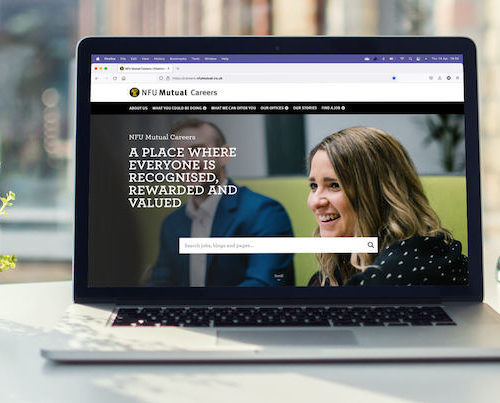
We work in partnership with the resourcing team at NFU Mutual to produce blog articles for them. Each article is designed to promote one of their key employer proposition pillars. Using their people to articulate and demonstrate these pillars and offer a personal insight into what they mean to them. Take a look at their ‘Our stories’ section to see this in practice, https://careers.nfumutual.co.uk/our-stories.

For other clients, we simply put in place the platforms, helped shape their strategy and let them loose. The ‘Inside Hastings’ careers blog has now been live for over six years and contains over 100 articles. All written by the Hastings Direct resourcing team each is focused around one of the 4Cs that shape the way that they do business – colleagues, customer, community and company.

The SEO juice of a careers website blog

Research from LinkedIn shows the SEO value of a careers website blog. 75% of job seekers will consider an employer’s brand before even applying for a job. And 52% will first seek out the company’s sites and social media to learn more about the employer.  A careers blog provides content that ticks both those boxes.

What’s more, a careers blog provides you with a whole host of career related terms for which candidates could be searching. This in turn means that a blog can be the part of your site that effectively ‘lands’ the candidate, in addition to the vacancies themselves. Candidates searching for things like ‘careers in finance’, ‘hybrid working in (your location)’, ‘sustainable work culture’ will be more likely to find those employers whose career blog content shows up in their search results.

Career blog content ideas

Stories that come from employees themselves often make the best content. And that’s because they are relatable, told by people your candidates see as being like them and who they can trust. The good news, as we’ve regularly found, is that your employees will have a wealth of stories to tell and these are usually the ones that attract the most interest. What this also means is that, for a busy resourcing professional, finding the content for a careers blog is less daunting than you might think.

So, what can you cover? There’s stories about progression and career paths. NFU Mutual ran a series on Women in Finance, profiling a number of women in their organisation with their personal stories of career development. Take a look at Alvyda’s story as an example. You can also cover stories about company culture. We work with iconic global brand Miele, also managing content on their careers blog. Here’s an article on their careers site about the diverse and inclusive culture at their global digital hub, Miele X in Amsterdam and why it makes working there so different.

There’s really no limit to the ideas you could use. Stories of roles and purpose, remote and hybrid working, early careers, career accomplishments, personal profiles of life outside work. And, if you want to tempt people back into the office after the pandemic, you could run a piece on your new office, especially if it’s as spectacular as the new Miele X HQ in Amsterdam which also delves into their sustainability values.

A few tips on managing careers blog content

Yes, we know that maintaining a careers website blog can be resource heavy, but the benefits massively outweigh the effort. And we do have a few tricks that you may find useful.

Shape your content around your proposition

What is it that you want to be known for as an employer? What are the points that will differentiate your offer from that of your competitors for the same candidates? If your article isn’t supporting one of your proposition pillars is it worth writing?

Record all interviews (with your employees’ permission)

Not only will you not risk missing out on any valuable points they make, you can then send the audio file to a transcription service like rev.com. This will save you hours of time – we know!

Give employees the heads up on what you’ll be covering

Make sure your resourcing team or your agency, like us, gives them a few questions or at least a theme you’ll be covering in advance. This way they can gather their thoughts before you speak.

Don’t be afraid to ask for help

If you don’t have a good in-house writer, consider outsourcing the content creation aspects so that this gets done more quickly. Especially if you don’t llike writing. Give the job to a writer. They know what they’re doing. And they’ll probably enjoy it more.

Each article is little marketing tool

Create each piece of content with a specific aim in mind. And make sure that it can be found, indexed and promoted through the search engines. It could be the way that people find your website.

In short

Because candidates want to know so much more about culture, values, purpose and progression, a careers blog has become an extremely valuable part of an attraction strategy. Not only do they answer the questions candidates may have – often by people they can relate to, they enable a more considered application from more engaged candidates. We reckon that’s highly attractive to a recruiter in a tight talent market.

Need a little help?

If you feel that you’d like some help, support or even a little chat around managing a careers website blog or any aspect of your talent attraction strategy just drop us a line. After all, much of our best work has started with a cup of tea and a Zoom call.

That Little Agency - Employer Branding - Copywriting Thumbnail Image

But you can’t start a sentence with…

By Content marketing

I love a guest blog article. So when I was recently talking to friend and ‘man of words’ Phil Welch of Welch Words about advertising, grammar and the evolution of language, it gave me an idea. And I was delighted when he agreed to share his thoughts with us around copywriting. So, take it away Phil …

Ask any professional copywriter what bugs them most and I’ll guarantee it’ll be this: Clients who say: “You can’t start a sentence with And.” (Or ‘But’. Or ‘So’.)

And usually the only reason is because they were taught that at school. And that’s where a lot of the problem lies – school. If you learn it at school, it must be right. Right? Well not really, no. Let’s look at the history behind why this particular rule is taught in schools.

A little history lesson

In the late 18th and early 19th centuries, a group of prominent university scholars decided to elevate the English language so it had the same gravitas as Latin. And to do this, they decided they had to take all the grammatical rules that applied to Latin and apply them to English. Now, these grammarians were professors at the most prominent UK universities and taught this to their students. And those students went on to become tutors. So it was passed down from tutor to teacher, teacher to tutor…

So, this means we’re taught at school that we can’t start an English sentence with a conjunction like ‘and’, ‘but’ or ‘so’. Because you couldn’t do it in Latin. A totally different language that hasn’t been widely spoken for over 1500 years.

Now, this might be a useful rule if you want to write something formal, like an essay. But when was the last time you wrote an essay? And why should we apply this particular rule to modern marketing? (Hint: We shouldn’t.)

The evolution of copywriting

After all, one of the greatest strengths of the English language is its adaptability. New words and meanings emerge almost overnight. Just think of Zoom, Brexit, or selfie. And grammatical rules are stretched by the people who use the language every day.

For instance, when you speak, you start sentences with conjunctions all the time. So, breaking this rule in writing makes what you write more conversational. More friendly. More engaging. And, as the great advertising guru David Ogilvy explained: “I don’t know the rules of grammar. If you’re trying to persuade people to do something, or buy something, it seems to me you should use their language.”

That’s why so many well-known brands ignore the grammatical rules and use the same language as their audiences. For example:

So, when a writer breaks a grammatical rule, it’s not about right or wrong. It’s about tone.

And if a client said to me: “You can’t start a sentence with ‘and’. Because it doesn’t suit our brand’s tone of voice,” I’d have no problem with that. It’s just they never seem to add that second sentence. And, because they were taught that you can’t, they insist you can’t.

But the simple truth is, when it’s right for your brand and your audience, you definitely can.

Need a little help?

If you feel that you’d like some help, support or advice around copywriting then get in touch. After all, much of our best work has started with a cup of tea, a biscuit and a Zoom call.